The Swift Fox
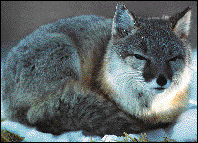
[Vulpes Velox]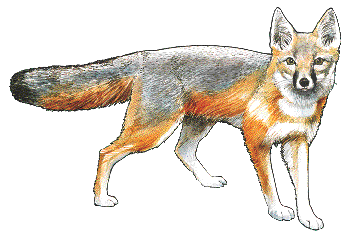 My interest in the Swift Fox, the smallest of North America's wild dogs, was generated when my daughter decided to write about them as a school project. "Once we numbered in the thousands, but now we are bones and dirt," she wrote in her essay entitled I am a Swift Fox.
Few Canadians realize that this marvelous, cat-sized canine was extinct in all of Canada until about two decades ago when attempts were first made to reintroduce them.
The return of the Swift Fox is a marvelous tale of the human spirit -- and the people whose homepages you will see below who have given their lives to reintroducing them. And, if you want to help, their links will lead you to how you can do so.
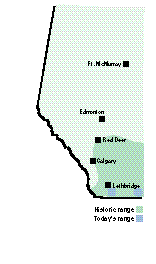
Status: Endangered. Swift fox disappeared entirely from Canada in the early 1900s. Reintroduction programs in the last 15 years have established a small population of 150-200 in the southern prairies of Alberta and Saskatchewan.
Size: Smallest of the North American wild dogs. An adult weighs 2 to 3 kilograms.
Food: Swift foxes hunt continually from dusk to dawn, covering great distances each night. They eat what they can catch, including small mammals, birds, reptiles, amphibians, fish, insects, grasses and berries.
Breeding: Probably occurs in March in Alberta. Two to five pups are born in the den in mid-May.
Lifespan: In the wild, three to six years. In captivity, up to 14 years.
Risk factors: Foxes are curious and have little fear of people so they're easy to kill. In the early 1900s, hundreds were destroyed accidentally during predator control programs aimed at removing wolves, coyotes and ground squirrels from the prairies. Some people continue to mistake them for young coyotes and kill them. Habitat loss due to agricultural, industrial and urban development also reduced their numbers. Dens were ploughed over and native grasses replaced with tall cereal crops that are unsuitable for foxes or their food.
Management and Outlook: Government and private agencies have released 800 swift foxes in the past 12 years. They say it's a good sign most of the population now living on the Prairies are offspring of reintroduced foxes. The programs will likely continue until 1997 when biologists hope to have established a self-sustaining population of 400.
The Edmonton, Alberta Valley Zoo has a pair of foxes whose young are released each year. Foxes are also captured in the U.S. then released in Canada with some success. It is illegal to disturb swift foxes or their dens.
Photo Credits: L. Carbyn
Swift Fox and Related Links
Links to Other Fox & Wild Canine Pages
My WEB search for fox and wild canine pages was interesting. There are many people who call themselves after foxes, e.g., "Vixen", "Snowfox", "Ed the Fox." Then there are the "Furry" and Animal Art pages ... artists and others who like drawings and artwork of fox-type disneyesque critters. Only a few of these people have information about the real thing. Since my own interest is in helping to keep the real thing on this sweet earth, I've mainly presented real fox and wild canine links below.
Specific Fox Species
General Fox & Wild Canine Links
Want to help? Join or Make a Donation to an Organization that makes a difference.
If you live in the united states, these green links will take you to organizations that make a difference there.
For information, comment or contribution to this site, contact the webmaster.
Other pages by this webmaster